Python Requests Proxy Setup: Configuration & Authentication
Updated October 26, 2026
Python Requests Proxy Setup: Configuration and Authentication
For command-line authentication syntax and broader HTTP 407 troubleshooting, the curl proxy authentication guide provides the companion reference.
Configuration for python requests proxy setup
The application environment needs Requests installed. These commands install it and report the version that should accompany test results:
python -m pip install requests
python -c "import requests; print(requests.__version__)"
Before execution, the deployment's secret-management tooling should populate PROXY_USERNAME and PROXY_PASSWORD. Separate environment variables hold PROXY_SCHEME, PROXY_HOST, and PROXY_PORT, using the provider's documented endpoint details. Environment variables keep credentials out of source code, but process inspection and diagnostic dumps can still expose them.
An optional provider is IP9's residential and mobile proxies; endpoint values should always come from the selected provider's instructions rather than inferred formats.
import os
from urllib.parse import quote
import requests

scheme = os.environ["PROXY_SCHEME"]
host = os.environ["PROXY_HOST"]
port = os.environ["PROXY_PORT"]

username = quote(os.environ["PROXY_USERNAME"], safe="")
password = quote(os.environ["PROXY_PASSWORD"], safe="")

proxy_url = f"{scheme}://{username}:{password}@{host}:{port}"
proxies = {
    "http": proxy_url,
    "https": proxy_url,
}
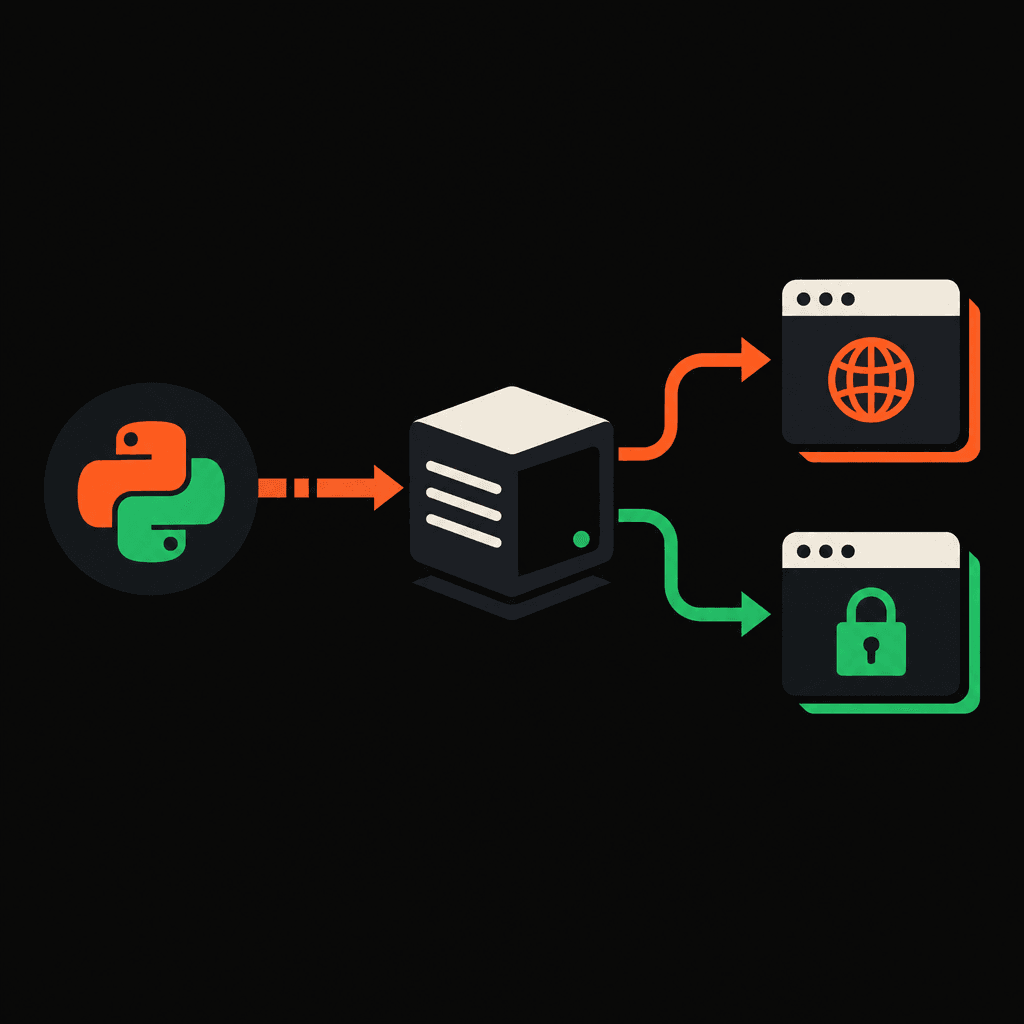
The python requests proxies parameter selects an entry using the destination URL's scheme. An HTTPS destination commonly uses an http:// proxy URL: Requests asks that HTTP proxy to establish a CONNECT tunnel, then negotiates TLS with the destination through it. That doesn't encrypt the initial proxy connection or its authentication exchange. An https:// proxy URL instead specifies TLS to the proxy and requires compatible endpoint support.
Encoding individual credential components prevents characters such as @, :, and / from changing URL structure. Encoding the entire URL would break its separators; encoding already encoded credentials would change their values.
Authenticated requests and safe verification
A reproducible python requests proxy setup test uses an endpoint controlled by the application owner, not a public IP-checking service. The endpoint should support the destination schemes being tested and retain access logs showing the connecting peer.
The following code continues the configuration above. PROBE_HTTP_URL and PROBE_HTTPS_URL must identify authorized test routes, while both timeout variables must contain positive seconds values.
timeout = (
    float(os.environ["CONNECT_TIMEOUT_SECONDS"]),
    float(os.environ["READ_TIMEOUT_SECONDS"]),
)

with requests.Session() as session:
    session.trust_env = False

    for name in ("PROBE_HTTP_URL", "PROBE_HTTPS_URL"):
        response = session.get(
            os.environ[name],
            proxies=proxies,
            timeout=timeout,
            allow_redirects=False,
            headers={"X-Proxy-Probe": "requests-routing-check"},
        )
        print(name, response.status_code)
        response.close()
The timeout tuple controls connection establishment and socket-read waits, not a total execution deadline. TLS certificate verification remains enabled. HTTP probes should carry no sensitive application data.
Destination logs should correlate the probe header with the observed peer address. Behind a load balancer, the endpoint needs a trusted client-address configuration. A successful status alone doesn't prove proxy routing, and response bodies or exception text shouldn't be logged if they could expose secrets. The probe should run under the recorded Requests version before deployment.
How does python requests proxy setup handle environment settings?
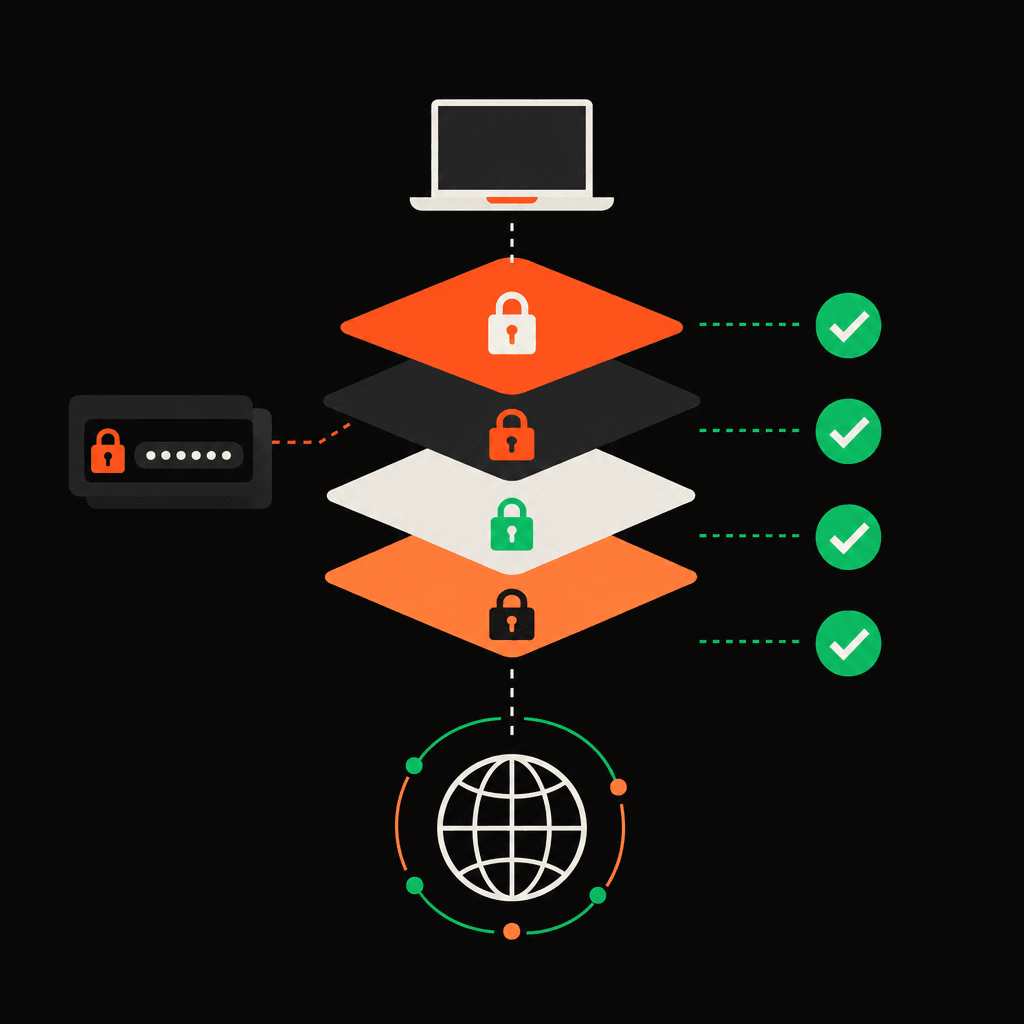
Explicit per-request proxy entries take precedence for matching destinations. With the default trust_env=True, environment-derived proxy settings can override values stored only in Session.proxies.
Requests recognizes proxy environment variables such as http_proxy, https_proxy, all_proxy, and their uppercase forms. no_proxy controls exclusions during environment-based selection; it shouldn't be treated as an override for explicitly supplied proxy entries.
For consistent Session-level routing, this alternative reuses the configuration variables above:
with requests.Session() as session:
    session.trust_env = False
    session.proxies.update(proxies)

    response = session.get(
        os.environ["PROBE_HTTPS_URL"],
        timeout=timeout,
        allow_redirects=False,
    )
    print(response.status_code)
    response.close()
A Session reuses connections and persists cookies, but doesn't guarantee a stable proxy exit address. Per-request configuration suits explicit routing decisions; Session configuration suits repeated requests sharing the same settings.
Setting trust_env=False also disables automatic .netrc authentication and environment-based CA bundle selection, including REQUESTS_CA_BUNDLE. Applications needing a private CA must pass an approved bundle path through verify, rather than using verify=False.
Python errors and targeted fixes
When python requests proxy setup fails, the exception class and failure stage are more useful than repeated retries.
requests.exceptions.ProxyError: Check the proxy scheme, hostname, port, network reachability, and encoded credentials. The class covers multiple proxy failures, not authentication alone.- HTTP 407: Verify proxy credentials and the required authentication method. HTTPS tunnel failures may surface as
ProxyErrorrather than a normal response. The URL example supports Basic proxy credentials; it isn't a universal authentication adapter. ConnectTimeoutorReadTimeout: Identify whether connection establishment or response reading stalled before increasing limits.SSLError: Check certificates, hostname matching, and the approved trust bundle. Disabling verification isn't a fix.
For stage-by-stage network checks, the proxy connection timeout guide expands the diagnostic process without changing authentication code.
FAQ
How can python requests proxy setup avoid exposing credentials?
Credentials should remain outside source control. Logs should omit proxy URLs, prepared request headers, environment dumps, and raw exception messages that might contain authentication details.
Does the auth argument authenticate the proxy?
Requests' auth= argument normally authenticates to the destination server. It doesn't replace proxy credentials embedded in the proxy URL for this configuration.
Where should provider-specific configuration be checked?
IP9 users can consult the Residential Proxies Quick Start before translating provider instructions into environment variables.
Next time python requests proxy setup changes, the checks should cover endpoint details, credential encoding, environment precedence, TLS trust, and destination-side routing evidence.