How Rotating Residential Proxies Work: Request to Exit IP
Updated October 22, 2026
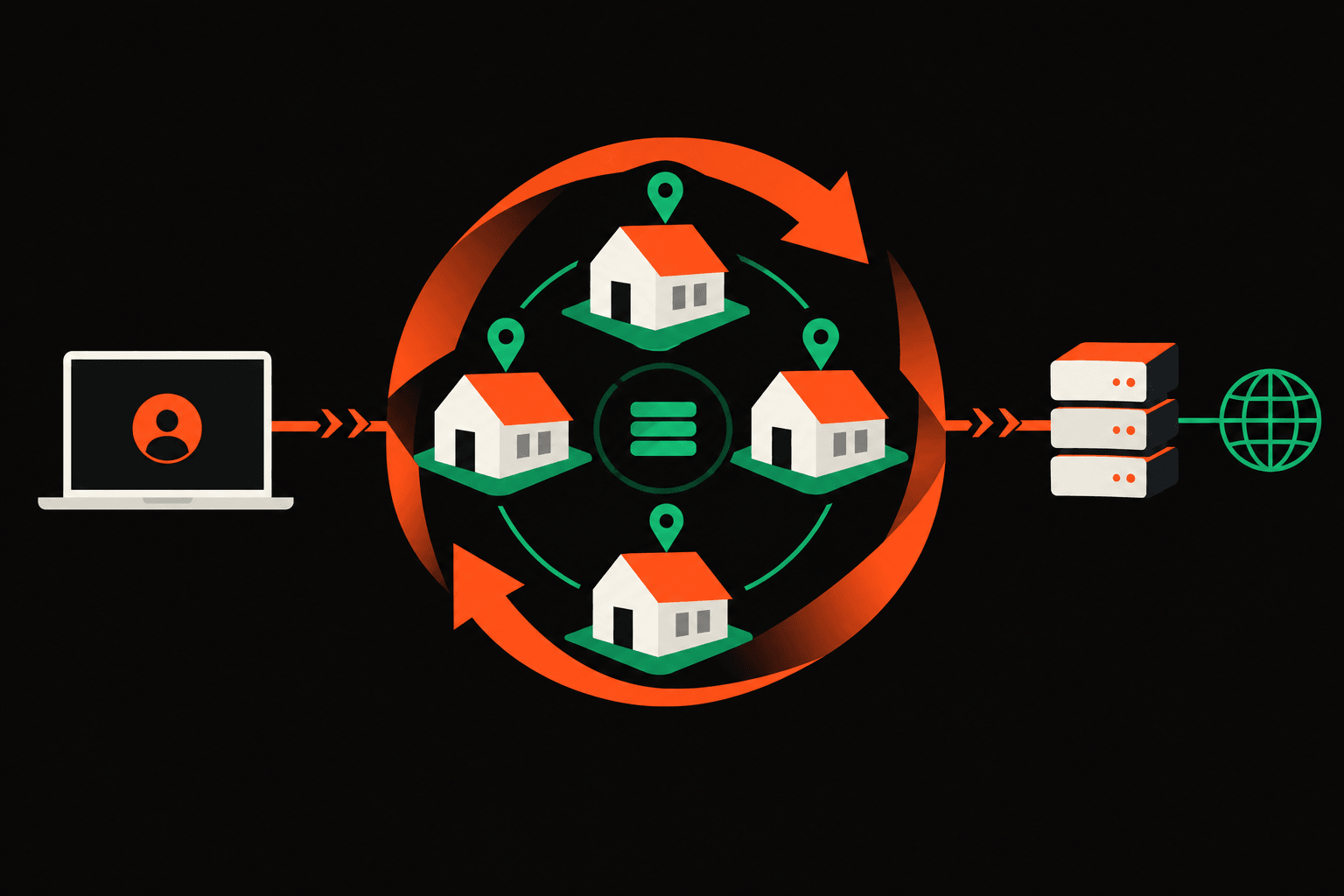
How Rotating Residential Proxies Work: From Request to Exit IP
How do rotating residential proxies work? Requests pass through proxy infrastructure and exit through residential IP addresses, with the address changing according to the provider's supported rotation behavior rather than necessarily changing on every request. Understanding how rotating residential proxies work starts with separating gateway configuration, exit selection, and application session state.
For purchasing guidance, the guide to buying rotating residential proxies explains how to match requirements to documented capabilities.
The request path: how rotating residential proxies work
A developer configures an application to use the provider's documented gateway and access method. That gateway is the entry point into the proxy service, not necessarily the address the destination will observe.
The rotating proxy request flow can be understood through an application sending a diagnostic request to an endpoint its engineering team controls. The endpoint records the incoming connection's source address and returns a small response. Although internal implementations vary, the functional stages remain distinct:
| Stage | What happens | What the test can establish |
|---|---|---|
| Client configuration | The application directs the request through the documented proxy connection. | The intended configuration is active in that client. |
| Gateway access | The service checks the supplied access credentials or other documented authorization method. | Proxy access succeeds or produces an access error. |
| Exit selection | The provider selects a residential exit under its supported routing and rotation rules. | The destination's observation identifies the public address used for that request. |
| Destination connection | The request reaches the controlled endpoint through the selected exit. | The server records the incoming source address and request details. |
| Response delivery | The response returns through the proxy connection to the client. | The client can correlate its result with the server's record. |
The gateway address and the observed exit address answer different questions.
Residential proxy authentication establishes permission to use the proxy service; it doesn't log the application into the destination. Likewise, proxy gateway routing selects a network path, not an application identity. The destination can still receive cookies, authorization headers, and other identifiers sent by the client.
As a concrete product example, IP9's residential and mobile proxies include Residential Proxies with Rotating IPs. The mechanics described here are general; specific rotation triggers and session controls require confirmation in the documentation for the service being configured.
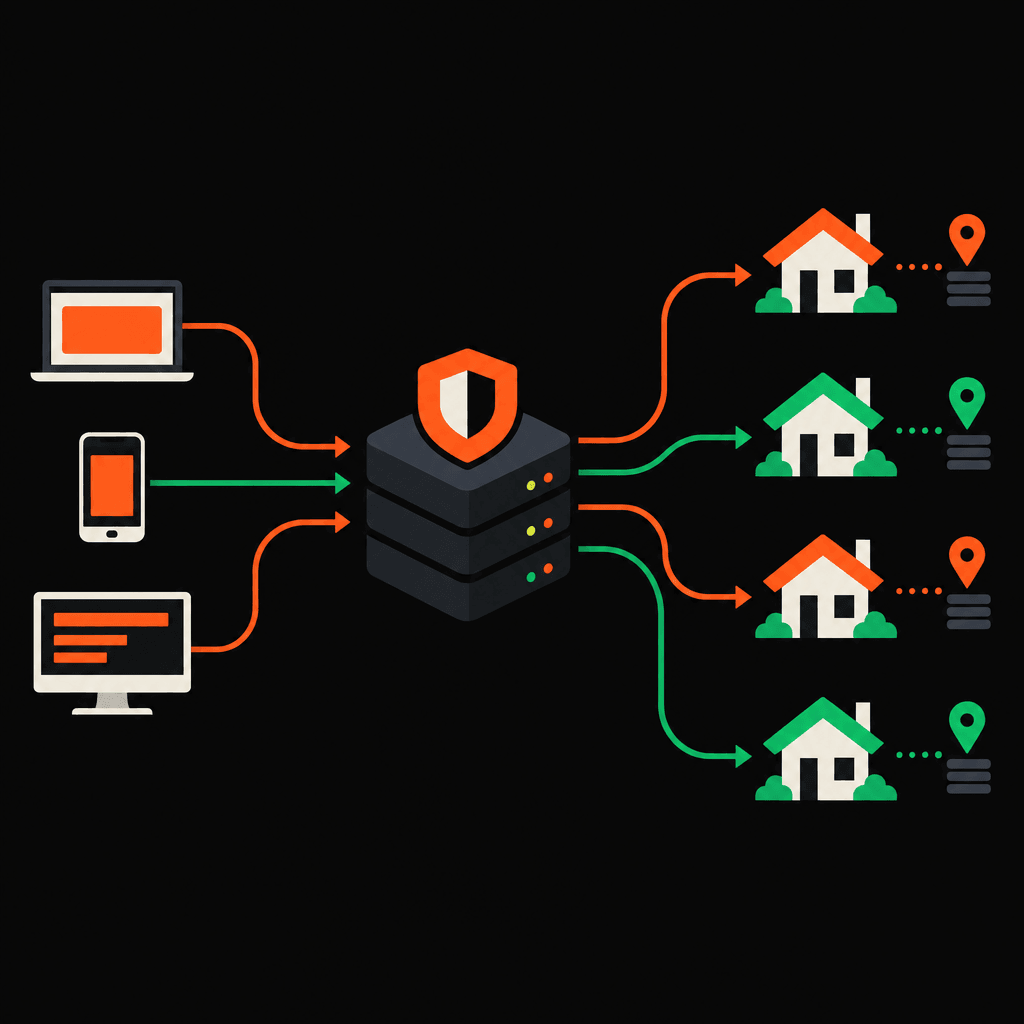
Rotation triggers determine when the exit can change
The central distinction in how rotating residential proxies work is the difference between sending another request and meeting a rotation condition. Those events aren't always equivalent.
In general implementations, per-request rotation selects an exit for each eligible request. Time-based rotation changes exit selection after a documented period or boundary. Other implementations tie selection to a connection or an explicitly supported session identifier. These are possible mechanisms, not confirmed IP9 controls.
Even a fresh selection doesn't necessarily guarantee an address that has never appeared before. A routing pool can select an address used earlier unless the provider explicitly guarantees otherwise. Conversely, an address might change because an exit becomes unavailable, rather than because a planned rotation boundary was reached.
Connection handling also matters. An application may reuse an existing connection for several requests, and a provider may apply its selection rules when that connection opens. Teams should establish whether the documented behavior applies to requests, connections, or sessions before interpreting repeated addresses as a fault.
Timing measurements belong alongside these observations, but they answer a separate question: whether the path performs acceptably. The residential proxy performance guide provides the broader framework for evaluating response behavior without treating address changes as a performance score.
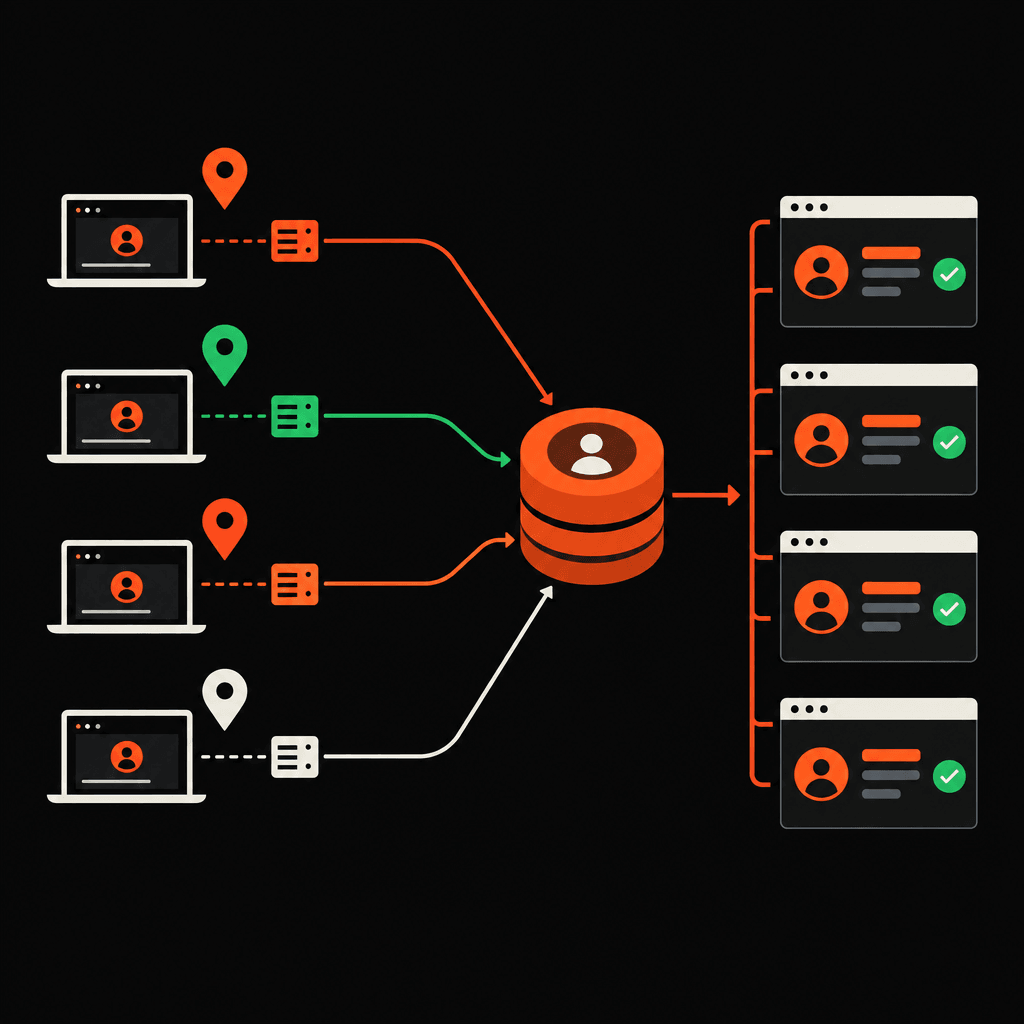
Session state changes how rotating residential proxies work in an application
A residential exit IP is a network attribute. A logged-in session is application state. Changing the former doesn't automatically replace the latter.
A browser can retain the same cookies while its outgoing address changes. An API client can continue sending the same authorization token through different exits. The destination may therefore recognize the same account or session throughout rotation, and it may apply additional checks when that session appears from a different address.
Where a provider supports session persistence, its purpose is generally to preserve an exit assignment under documented conditions. That doesn't preserve a destination login by itself, nor does it guarantee the address remains available indefinitely. Provider-side routing state and destination-side application state must be tested separately.
During a controlled test, the client should retain its cookie state while the team observes exit selection. A separate test can vary cookies while holding the network setup unchanged. Changing both together makes the result harder to explain.
Request volume is another independent variable. Rotation doesn't inherently reduce transferred data; the guide to reducing residential proxy bandwidth usage addresses unnecessary traffic rather than exit selection.
Verify the exit with an endpoint under team control
A useful verification exercise turns how rotating residential proxies work into a comparison between intended configuration and destination-side evidence. The endpoint should belong to the testing team, return a minimal response, and record only the information needed for diagnosis.
If that endpoint sits behind a reverse proxy or load balancer, its application logs may show the intermediary's address. The team should use trusted edge logs or correctly configured client-address forwarding. An arbitrary client-supplied header isn't reliable proof of the incoming source address.
- Confirm the documented setup. The engineer obtains the gateway, access method, and supported rotation conditions from provider documentation. Credentials stay outside shared logs and version control.
- Establish a baseline. A direct request to the controlled endpoint records the client's ordinary public source address, if direct access is permitted.
- Send a proxied request. The configured client sends a labeled diagnostic request. The server records its source IP, request label, and receipt time.
- Repeat under the documented condition. The tester follows the supported rotation behavior while keeping the destination and application state unchanged.
- Compare correlated records. The team checks gateway configuration, observed exit addresses, and application session state as separate fields.
For IP9 configuration, the residential proxy Quick Start is the appropriate starting point. Connection syntax and supported controls should come from those instructions rather than assumptions based on another provider's configuration.
Interpret changes without overclaiming the result
Evidence of how rotating residential proxies work comes from correlated observations, not a successful response alone. Different destination-observed addresses demonstrate that the exit changed during the test. They don't establish a guaranteed rotation interval or prove that every future request will use a different address.
An unchanged address is also inconclusive without the documented trigger. The connection may still be active, an exit assignment may persist, or a fresh selection may return the same address. Teams should check these possibilities before changing unrelated settings.
A failed request requires a different diagnostic path. Authentication failure, connection establishment failure, and destination rejection occur at different stages. The residential proxy timeout troubleshooting guide helps separate connection problems from assumptions about rotation.
And a changed address doesn't establish anonymity. Cookies, account credentials, and request characteristics may still connect activity to the same application or user.
FAQ
Can a server log demonstrate how rotating residential proxies work?
It can demonstrate the exit addresses observed by that server. Correlation with client records and documented rotation conditions is necessary to explain when those changes occurred; server logs alone don't reveal the provider's internal routing algorithm.
Why can the gateway stay unchanged while the exit changes?
The gateway is the client's entry point into the service. The provider can route traffic from that entry point through different residential exits, so the configured gateway doesn't need to change with each exit selection.
Does keeping a cookie prevent an exit address from changing?
A destination cookie doesn't ordinarily control proxy routing. Unless a provider documents a specific integration, cookie persistence and exit selection should be treated as separate mechanisms.
What does a successful rotation test actually prove?
It proves that the controlled endpoint observed an address change under the tested conditions. It doesn't guarantee access to other destinations, establish geographic accuracy, or demonstrate every supported session behavior.
Destination logs make how rotating residential proxies work testable.